" height="232.354px" id="Kl9gPwrAr" transform="translate(1717.49 0)" width="75.42000000000007px"/><path d="M 73.28 0 C 113.58 0 134.65 28.09 134.65 68.088 L 134.65 77.554 L 25.34 77.554 C 25.34 117.55 46.71 144.726 81.22 144.726 C 104.12 144.726 118.47 133.428 129.76 118.466 L 134.95 121.215 C 127.63 148.389 105.03 167.929 70.83 167.929 C 26.26 167.929 0 132.817 0 89.155 C 0 35.724 31.14 0 73.28 0 Z M 68.7 14.961 C 44.58 14.961 29.01 37.556 26.56 62.898 L 106.56 62.898 C 106.56 33.587 93.73 14.961 68.7 14.961 Z" fill="rgb(0, 4, 26)" height="167.9295px" id="Dh1gctGLU" transform="translate(1575.69 67.478)" width="134.95000000000005px"/><path d="M 73.28 0 C 113.58 0 134.65 28.09 134.65 68.088 L 134.65 77.554 L 25.34 77.554 C 25.34 117.55 46.71 144.726 81.22 144.726 C 104.11 144.726 118.46 133.428 129.76 118.466 L 134.95 121.215 C 127.62 148.389 105.03 167.929 70.83 167.929 C 26.26 167.929 0 132.817 0 89.155 C 0 35.724 31.14 0 73.28 0 Z M 68.7 14.961 C 44.58 14.961 29 37.556 26.56 62.898 L 106.56 62.898 C 106.56 33.587 93.73 14.961 68.7 14.961 Z" fill="rgb(0, 4, 26)" height="167.9295px" id="sTkc1lbds" transform="translate(1429.94 67.478)" width="134.95000000000005px"/><path d="M 51.9 0 L 51.9 97.399 C 66.87 82.744 84.88 67.477 110.22 67.477 C 136.79 67.477 152.97 81.828 152.97 117.551 L 152.97 204.264 C 152.97 218.309 163.04 219.836 176.78 221.668 L 176.78 232.354 L 101.37 232.354 L 101.37 221.668 C 114.8 219.836 124.88 218.309 124.88 204.264 L 124.88 119.688 C 124.88 97.705 116.02 90.072 96.48 90.072 C 80.61 90.072 63.81 97.094 51.9 106.254 L 51.9 204.264 C 51.9 218.309 61.98 219.836 75.41 221.668 L 75.41 232.354 L 0 232.354 L 0 221.668 C 13.74 219.836 23.81 218.309 23.81 204.264 L 23.81 32.365 L 1.53 21.678 L 1.53 15.266 L 44.27 0 Z" fill="rgb(0, 4, 26)" height="232.354px" id="u4ObJrh1g" transform="translate(1248.66 0)" width="176.77999999999997px"/><path d="M 168.84 119.994 L 201.21 29.922 C 202.43 26.258 203.04 24.121 203.04 21.678 C 203.04 14.35 197.24 12.824 181.67 10.687 L 181.67 0 L 239.07 0 L 239.07 10.687 C 225.33 15.572 223.8 16.182 221.36 22.9 L 168.23 164.877 L 160.6 164.877 L 120.3 57.096 L 79.38 164.877 L 72.06 164.877 L 17.4 22.9 C 14.96 16.182 13.43 15.266 0 10.687 L 0 0 L 69 0 L 69 10.687 C 53.74 12.824 47.63 14.35 47.63 21.678 C 47.63 24.121 48.55 27.48 49.77 30.838 L 82.13 119.383 L 112.36 37.555 L 107.17 22.9 C 104.73 16.182 102.89 15.266 89.15 10.687 L 89.15 0 L 157.24 0 L 157.24 10.687 C 141.36 12.824 135.56 14.35 135.56 21.678 C 135.56 24.121 136.48 27.48 137.7 30.838 Z" fill="rgb(0, 4, 26)" height="164.8768px" id="BakTvJk8x" transform="translate(1013.56 70.533)" width="239.07000000000016px"/><path d="M 124.879 136.786 L 124.879 52.21 C 124.879 30.227 116.025 22.594 96.484 22.594 C 80.607 22.594 63.203 29.617 51.601 38.776 L 51.601 136.786 C 51.601 150.832 61.371 152.358 75.111 154.191 L 75.111 164.876 L 0 164.876 L 0 154.191 C 13.435 152.358 23.511 150.832 23.511 136.786 L 23.511 32.365 L 1.527 21.678 L 1.527 15.266 L 43.968 0 L 51.601 0 L 51.601 29.922 C 66.562 15.266 84.881 0 110.224 0 C 136.787 0 152.969 14.35 152.969 50.074 L 152.969 136.786 C 152.969 150.832 163.048 152.358 176.788 154.191 L 176.788 164.876 L 101.369 164.876 L 101.369 154.191 C 114.803 152.358 124.879 150.832 124.879 136.786 Z" fill="rgb(0, 4, 26)" height="164.8765px" id="KLM9nuer9" transform="translate(846.002 67.478)" width="176.788px"/><path d="M 36.333 40.914 C 25.342 40.914 16.487 31.754 16.487 20.457 C 16.487 9.16 25.342 0 36.333 0 C 47.325 0 56.18 9.16 56.18 20.457 C 56.18 31.754 47.325 40.914 36.333 40.914 Z M 51.6 62.592 L 51.6 199.379 C 51.6 213.424 61.37 214.951 75.11 216.783 L 75.11 227.469 L 0 227.469 L 0 216.783 C 13.434 214.951 23.51 213.424 23.51 199.379 L 23.51 94.957 L 1.526 84.27 L 1.526 77.858 L 43.967 62.592 Z" fill="rgb(0, 4, 26)" height="227.46875000000003px" id="wc5drELYV" transform="translate(763.165 4.885)" width="75.11000000000001px"/><path d="M 51.905 151.137 L 51.905 196.937 C 51.905 210.981 61.981 212.507 75.721 214.339 L 75.721 225.026 L 0 225.026 L 0 214.339 C 13.739 212.507 23.815 210.981 23.815 196.937 L 23.815 32.365 L 1.526 21.678 L 1.526 15.266 L 44.577 0 L 51.905 0 L 51.905 26.564 C 64.729 10.381 81.522 0 104.116 0 C 145.641 0 167.319 34.197 167.319 76.332 C 167.319 132.817 132.206 167.929 91.903 167.929 C 72.973 167.929 58.622 160.907 51.905 151.137 Z M 91.292 153.885 C 119.688 153.885 139.229 128.542 139.229 89.155 C 139.229 54.654 125.794 20.457 91.598 20.457 C 76.637 20.457 61.065 25.648 51.905 35.418 L 51.905 111.445 C 51.905 139.535 67.477 153.885 91.292 153.885 Z" fill="rgb(0, 4, 26)" height="225.0265px" id="hvXNnfhq3" transform="translate(586.583 67.478)" width="167.31900000000007px"/><path d="M 68.698 220.446 C 39.997 220.446 15.571 210.676 2.137 199.379 L 0 149.305 L 10.686 149.305 C 19.846 181.364 38.471 205.18 69.614 205.18 C 98.315 205.18 115.719 191.135 115.719 166.098 C 115.719 145.03 101.979 135.26 65.034 121.52 C 24.426 106.559 2.442 91.903 2.442 57.402 C 2.442 25.037 26.563 0 69.309 0 C 94.04 0 116.329 8.244 132.817 19.236 L 132.817 65.951 L 122.741 65.951 C 115.719 36.334 97.399 15.266 67.782 15.266 C 42.135 15.266 29.006 29.922 29.006 49.463 C 29.006 70.225 39.387 79.69 77.247 93.735 C 122.13 110.223 143.503 126.1 143.503 159.991 C 143.503 199.073 109.307 220.446 68.698 220.446 Z" fill="rgb(0, 4, 26)" height="220.446px" id="LeoVvyEWA" transform="translate(437.081 14.96)" width="143.50299999999993px"/><path d="M 285.399 142.7 C 285.399 221.511 221.51 285.4 142.7 285.4 C 63.889 285.4 0 221.512 0 142.701 C 0 63.89 63.889 0 142.7 0 C 144.941 0 147.17 0.053 149.386 0.155 C 90.503 20.747 48.267 76.791 48.267 142.7 L 48.274 143.921 C 48.928 195.512 90.953 237.133 142.699 237.133 C 194.853 237.133 237.132 194.854 237.132 142.7 C 237.132 105.427 215.539 73.207 184.189 57.849 C 189.074 56.989 194.102 56.54 199.238 56.54 C 219.055 56.54 237.299 63.225 251.854 74.465 C 272.265 90.229 285.399 114.93 285.399 142.7 Z" fill="rgb(0, 4, 26)" height="285.39957000000004px" id="KzUAEFh67" transform="translate(0 3.169)" width="285.399px"/><path d="M 237.132 142.7 C 237.132 112.259 222.723 85.181 200.371 67.919 C 184.419 55.599 164.409 48.268 142.699 48.268 C 131.832 48.268 121.385 50.105 111.658 53.489 C 74.759 66.328 48.267 101.415 48.267 142.7 C 48.267 179.971 69.857 212.191 101.205 227.55 C 96.32 228.411 91.292 228.861 86.16 228.861 C 38.576 228.86 0.001 190.286 0 142.701 L 0.011 140.857 C 0.999 62.896 64.505 0 142.7 0 C 221.51 0 285.399 63.89 285.399 142.701 C 285.399 221.511 221.51 285.4 142.7 285.4 C 140.459 285.4 138.231 285.347 136.016 285.244 C 194.897 264.652 237.132 208.609 237.132 142.7 Z" fill="rgb(0, 4, 26)" height="285.39957000000004px" id="toapGQ6m3" transform="translate(56.539 3.169)" width="285.3991px"/></svg>)
" height="285.4px" id="ccL2W0i9_" width="285.399px"/><path d="M 237.132 142.7 C 237.132 112.259 222.723 85.181 200.371 67.919 C 184.419 55.599 164.409 48.268 142.699 48.268 C 131.832 48.268 121.385 50.105 111.658 53.489 C 74.759 66.328 48.267 101.415 48.267 142.7 C 48.267 179.971 69.857 212.191 101.205 227.55 C 96.32 228.41 91.292 228.86 86.16 228.86 C 38.576 228.86 0.001 190.285 0 142.701 L 0.011 140.857 C 0.999 62.896 64.505 0 142.7 0 C 221.51 0 285.399 63.89 285.399 142.701 C 285.399 221.511 221.51 285.4 142.7 285.4 C 140.459 285.4 138.231 285.346 136.016 285.244 C 194.897 264.652 237.132 208.608 237.132 142.7 Z" fill="rgb(0, 4, 26)" height="285.4px" id="jBpX3TwPH" transform="translate(56.539 0)" width="285.3991px"/></svg>)
Why Every Stage of the Consumer Credit Lifecycle Depends on Better Data
Jessica Kendall
•
Updated

There is no universally accepted framework for the consumer credit lifecycle. Every lender, fintech, and financial institution sees the customer journey slightly differently. Some start with marketing. Others start with identity verification or underwriting. Some view servicing as the final stage, while others see it as the beginning of the next lending opportunity.
However, what is universal are the capabilities required to make every step along the customer journey successful. Whether you're acquiring a new borrower, refinancing existing debt, or helping customers manage repayment, the consumer credit lifecycle requires reliable, accurate credit data and confidence in consumer identity and account ownership. At the same time, consumers increasingly demand frictionless experiences at every stage.
When any one of these elements is missing, the entire lifecycle becomes more expensive and less effective. Consumers abandon applications. Verification creates excessive friction. Credit decisions rely on incomplete information. Payments fail to reach the right destination. Servicing opportunities are missed.
At Spinwheel, we think about the consumer credit lifecycle as 8 connected stages. Each one creates opportunities to reduce friction for consumers, improve decision-making and outcomes, and build stronger financial relationships.
The challenge for many organizations is that each stage is often powered by different systems, different data, and different teams. Marketing hands off to onboarding. Onboarding hands off to underwriting. Underwriting hands off to servicing.
But, the strongest consumer credit experiences aren't optimized one stage at a time. They're connected from beginning to end.
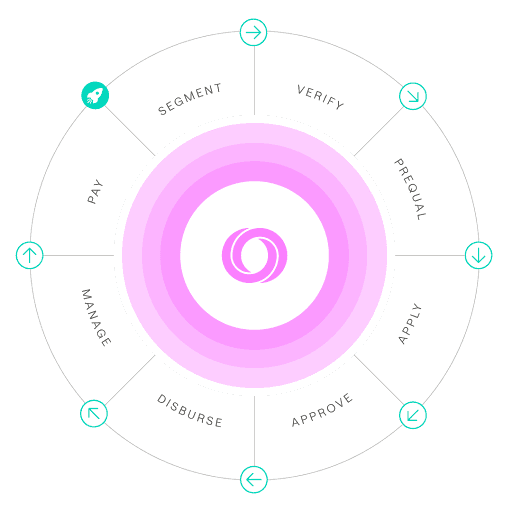
1. Segment: Know Who to Reach Before the First Touchpoint
The consumer credit journey starts long before someone submits an application. Financial institutions first need to identify which consumers are most likely to benefit from a particular product or offer.
The challenge is that segmentation often relies on incomplete, outdated, or generalized data. Marketing teams may know broad demographics but lack insight into a consumer's actual debt obligations, lending relationships, or financial opportunities.
Without accurate visibility into a consumer’s existing obligations, debt composition, and credit attributes, organizations are simply guessing at acquisition strategies, audience selection, and resource allocation.
Reliable credit data enables institutions to build more relevant audiences based on real financial circumstances rather than assumptions. For consumers, that means receiving offers that are actually relevant instead of generic marketing that misses the mark. For lenders, that means more qualified leads and a higher conversion rate to drive growth and reduce acquisition costs.
2. Verify: Confirm Identity and Account Ownership Before Critical Financial Decisions
Trust begins with knowing exactly who you're working with.
Identity verification has become increasingly important as fraud grows more sophisticated. In fact, Equifax reports synthetic identities — fraudulent identities created from a mix of real and fabricated information — on credit applications have increased nearly 50% in the past 4 years.
Now, synthetic identity fraud makes up more than 1 in every 10 fraud cases, according to LexisNexis Risk Solutions. This makes it harder than ever to spot fraud with basic verification processes. But, verification extends beyond confirming identity alone. Financial institutions also need confidence that the consumer owns the accounts they're connecting.
The challenge is balancing security with usability. Every additional verification step introduces friction that can hurt conversion, but insufficient verification creates risk for both consumers and institutions.
However, when verification happens seamlessly, consumers move through the process quickly while institutions can be confident in consumer identities and account ownership.
3. Prequal: Understand Eligibility Before the Application Begins
Consumers increasingly expect to know whether they're likely to qualify before investing time in a full application. And, they are more likely to engage when they understand their options.
However, without visibility into potential eligibility, lenders struggle to personalize offers and end up with wasted applications from borrowers who aren’t eligible for a particular product. The difficulty is making accurate eligibility assessments without requiring consumers to complete lengthy application processes.
Enabling seamless access to real-time credit data with just a phone number and date of birth allows institutions to evaluate eligibility earlier in the journey while minimizing unnecessary friction. Consumers benefit from greater transparency and fewer disappointing application experiences. Institutions benefit from stronger conversion rates and higher-quality applications entering underwriting.
4. Apply: Create Frictionless Application Experiences with Verified, Pre-Populated Information
Applications remain one of the biggest points of abandonment in consumer lending. Long forms, manual data entry, repeated verification requests, and disconnected systems create unnecessary work for consumers who increasingly expect digital experiences to feel effortless.
More than half of consumers who start a digital bank account application never finish it. Taking it a step further, FICO found that, when presented with 10 or more questions, more than half of its 14,000 survey respondents will abandon their application. And, nearly 1 in 5 said they would drop out if asked 5 or more questions.
So why are we still asking consumers to manually fill in information that we can pre-populate based on what we already know about them? Verified consumer information and connected credit data allow applications to be pre-filled with accurate information, reducing manual entry, eliminating application friction, and limiting opportunities for errors.
5. Approve: Make Credit Decisions with a Complete Consumer Credit Profile
Credit decisions are only as good as the information supporting them. Many underwriting processes still rely on fragmented or outdated data, making it difficult to fully understand a consumer's financial obligations, repayment capacity, and opportunities.
Comprehensive credit data provides a more complete picture of liabilities, lending relationships, and financial health, enabling more informed credit decisions.
Better information benefits everyone. Institutions reduce risk while consumers receive decisions that more accurately reflect their financial situation.
6. Disburse: Move Funds to the Right Creditor, Lender, or Destination Account
Once a loan is approved, funds still need to reach the correct destination accurately and efficiently.
Whether refinancing debt, consolidating loans, or paying off existing obligations, institutions often face operational complexity when routing funds across multiple creditors and payment networks. Outdated creditor information, manual processes, paper checks, and incomplete account data create delays, operational costs, and funding risk.
Instead of relying on manual workflows and disconnected payment processes, financial institutions need verified data and a direct path to payment. This helps reduce manual processing and ensure payments reach the intended destination without delays or exceptions.
For consumers, that means faster access to the financial outcome they expected. For institutions, it means fewer operational headaches after approval.
7. Manage: Monitor Change and Identify New Opportunities over Time
The consumer credit lifecycle doesn't stop after funds are disbursed. Financial situations evolve continuously. Consumers pay down debt, open new accounts, improve their credit profiles, or become eligible for new financial products.
The challenge for lenders is maintaining visibility after origination. Static snapshots quickly become outdated, making it difficult to recognize meaningful changes or proactively engage customers.
Continuous access to updated credit data allows institutions to monitor portfolio health, identify emerging risks, and uncover opportunities for retention, cross-selling, refinancing, or additional lending.
8. Pay: Help Consumers Act on Opportunities to Repay, Consolidate, and Reduce Debt
Repayment is more than collecting monthly payments. It's an opportunity to help consumers improve their financial position while strengthening long-term relationships.
Many consumers juggle multiple creditors, payment schedules, and loan types, making debt management increasingly complex. And, complex payment portals and processes often prevent consumers from refinancing, consolidating debt, transferring balances, or paying down obligations.
As a result, consumers may miss payments, abandon applications to refinance or consolidate debt, and miss opportunities to improve financial outcomes. Consumers want — and need — simpler ways to repay, consolidate, and reduce debt.
When repayment experiences are simple and transparent, consumers are more likely to stay engaged and view their financial institution as a long-term partner rather than simply a lender.
Every Consumer Credit Lifecycle Stage Builds on the One Before It
While organizations may define the consumer credit lifecycle differently, the underlying challenges remain remarkably consistent.
Every stage depends on accurate data. Every interaction benefits from reducing friction. Every financial decision begins with confidence that the consumer and their accounts have been verified.
The institutions that connect these capabilities across the entire lifecycle won't simply create better customer experiences. They'll make better decisions, operate more efficiently, reduce fraud, and build stronger relationships that extend well beyond a single loan.
That's why we see the consumer credit lifecycle not as a series of isolated events, but as a connected journey powered by trusted credit data, verified consumers, and frictionless experiences from beginning to end.

Jessica Kendall
Head of Content and Communications